Safe swimming area identification: five signs that mark protected zones
 Save
A safe swimming area at the beach is marked by flags, staffed by lifeguards and free from visible natural hazards. Knowing what to look for before you enter the water reduces your risk and lets you enjoy the sea with confidence. In this guide you will find the visual clues that define a monitored zone, the natural features that signal danger, and the practical checks you can make in under a minute. Beach Lifeguards exists to help you understand these markers and use them every time you visit the coast.
Flag systems and their meaning
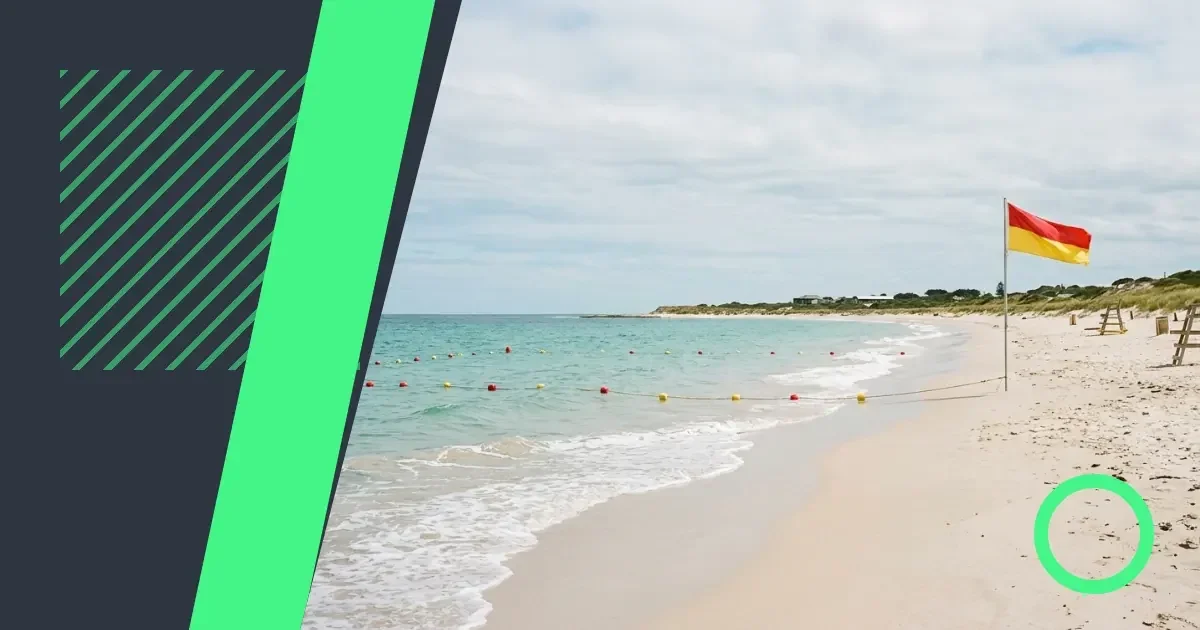
Flags are the fastest way to assess conditions. A red-and-yellow flag marks the patrol area where lifeguards are watching and the seabed has been checked. Swim between these flags whenever they are flying. A red flag means the water is closed to bathers; a yellow flag signals caution and tells you to stay within your depth. Some beaches also fly purple flags to warn of marine life such as jellyfish.
Each flag sits on a pole at the water's edge or slightly back from it. The patrol zone runs between two red-and-yellow flags, and lifeguards position them where conditions allow safe swimming that day. Wind, tide and swell can shift the zone's location from one morning to the next, so check the flags each visit rather than returning to yesterday's spot.
What no flags mean
An empty beach with no flags may be unpatrolled. Absence of flags does not mean the water is calm or shallow; it means no professional has assessed the conditions. If you choose to swim on an unpatrolled beach, stay close to shore, swim with others and tell someone on land where you are going.
Lifeguard presence and patrol hours
A staffed lifeguard station confirms that someone trained in rescue and first aid is on duty. Look for a tower, a vehicle or a tent near the waterline, and check the patrol hours posted at the entrance or on the station itself. Lifeguards typically operate during daylight in the summer season; outside those hours the beach is unpatrolled.
Arriving early or staying late puts you outside the patrol window. If the flags are down and the station is closed, treat the beach as unmonitored. Lifeguards also leave their post in severe weather or when visibility drops, so a closed station in the afternoon is a signal to reconsider your swim.
Signage and information boards
Permanent signs at the beach entrance list hazards specific to that stretch of coast: rip currents, submerged rocks, sudden drop-offs or strong tidal flow. Read them before you walk onto the sand. Some boards include a map showing the safest entry points and the areas to avoid.
Temporary signs appear when conditions change. A chalkboard near the lifeguard station might note jellyfish sightings, a spring tide or poor visibility. These updates reflect what the patrol team has observed that morning, so they are often more current than a printed board. For more detail on flag meanings, see our guide to beach flag colours and what they mean for your safety.
Natural features that signal hazard
The water itself gives clues. A rip current creates a channel of churned, discoloured water moving seaward, often with foam or debris. Waves breaking unevenly or a gap in the surf line can also mark a rip. If you see any of these from the shore, choose a different entry point or ask a lifeguard where to swim.
Rocky outcrops, groynes and piers create turbulence and unpredictable currents. Swim well away from structures, and avoid areas where waves rebound off a wall or cliff. Weed beds, sandbars and sudden depth changes are harder to spot from the beach, which is another reason to swim in the flagged zone where the seabed has been surveyed. Our article on spotting a rip current from the shore walks through the visual clues in more detail.
Tides and their effect on safety
A rising tide can cut off access to parts of the beach, trap you against a cliff or cover rocks that were visible an hour earlier. A falling tide exposes stronger currents and can leave you stranded on a sandbar. Check tide times before you arrive, and keep an eye on the waterline while you are swimming.
Crowd density and water traffic
A busy patrol zone suggests that others have read the conditions and chosen that spot. While crowding brings its own risks, a moderate number of swimmers means you are more likely to be noticed if you get into difficulty. Empty water in high season may indicate a hidden hazard or poor conditions that day.
Jet skis, boats and surfers share some beaches with swimmers. Designated swimming zones keep the activities separate; entering a surf zone or a boat channel increases your risk of collision. Look for marker buoys or ask at the lifeguard station if you are unsure where the zones divide.
Personal checks before entering the water
Once you have assessed the beach itself, turn your attention inward. Are you a confident swimmer? Do you know what to do if you feel yourself being pulled seaward? Have you eaten recently, and are you sober? Alcohol, fatigue and cold water are a dangerous combination.
If you are supervising children, keep them within arm's reach in the water. Inflatables drift quickly in wind and current, so leave them on the sand or use them only in very shallow, sheltered areas. For advice on keeping younger swimmers safe, read our guide on keeping children safe at the beach.
Steps to assess a safe swimming area
- Check for red-and-yellow flags and confirm the patrol zone is open.
- Locate the lifeguard station and verify that it is staffed.
- Read all signage at the entrance and near the waterline, including temporary updates.
- Observe the water for gaps in the surf, discoloured channels or breaking waves near structures.
- Assess your own ability and the abilities of anyone you are supervising, then choose your entry point accordingly.
Comparing monitored and unmonitored beaches
| Feature | Monitored beach | Unmonitored beach |
|---|---|---|
| Flags | Red-and-yellow flags marking the patrol zone | No flags or empty poles |
| Lifeguard presence | Staffed station with posted patrol hours | No station or closed facility |
| Seabed assessment | Checked daily for hazards | Unknown conditions |
| Emergency response | Trained rescue team on site | Relies on bystander action and emergency services |
What to do if conditions change while you are in the water
Weather and tide shift quickly at the coast. If you hear a whistle, see a lifeguard gesturing or notice the flags have changed, leave the water immediately. A whistle blast is not a suggestion; it is an instruction that the patrol team has seen a hazard you may not be aware of.
If you feel yourself being pulled away from shore, do not fight the current. Signal for help, stay afloat and let the current carry you until it weakens, then swim parallel to the beach to escape it. For a full explanation of what to do in this situation, see our article on what to do if you get caught in a rip current.
Choosing a safe spot when the patrol zone is crowded
A packed patrol area tempts some swimmers to move outside the flags for more space. Resist that temptation. The crowding confirms that the flagged zone is the only area the lifeguards have cleared that day. Swim early in the morning or later in the afternoon when numbers drop, or visit a neighbouring beach with a wider patrol zone.
If you do swim in a crowd, establish a landmark on the shore so you can track your position. Currents and waves push you along the beach without you noticing, and you may surface further from your towels than you expect.
#Flags #Lifeguards #Rip currents
Download PDF: Safe swimming area checklist PDF, 28 KB
Further reading
Frequently asked questions
How can I tell if a beach swimming area is patrolled by lifeguards before I arrive?
Check the beach's website or contact the local council for patrol hours and seasonal schedules. Many beaches also post patrol times on signs at the entrance, but calling ahead confirms that lifeguards will be on duty when you visit.
What should I look for in the water itself to know if a swimming area is safe?
Look for even wave patterns, clear water without debris or foam channels, and an absence of turbulence near rocks or structures. Discoloured or churned water moving seaward often marks a rip current, and breaking waves that form a gap signal an area to avoid.
Can I swim at a beach that has no flags up if the water looks calm?
You can, but you do so without the safety net of a lifeguard patrol or a checked seabed. Calm surface water can hide strong currents, sudden depth changes or submerged hazards, so swim close to shore, stay with others and tell someone on land your plans.